The system is processing. Please wait a moment!

Opening hours: Monday - Friday (7:00 - 17:00)



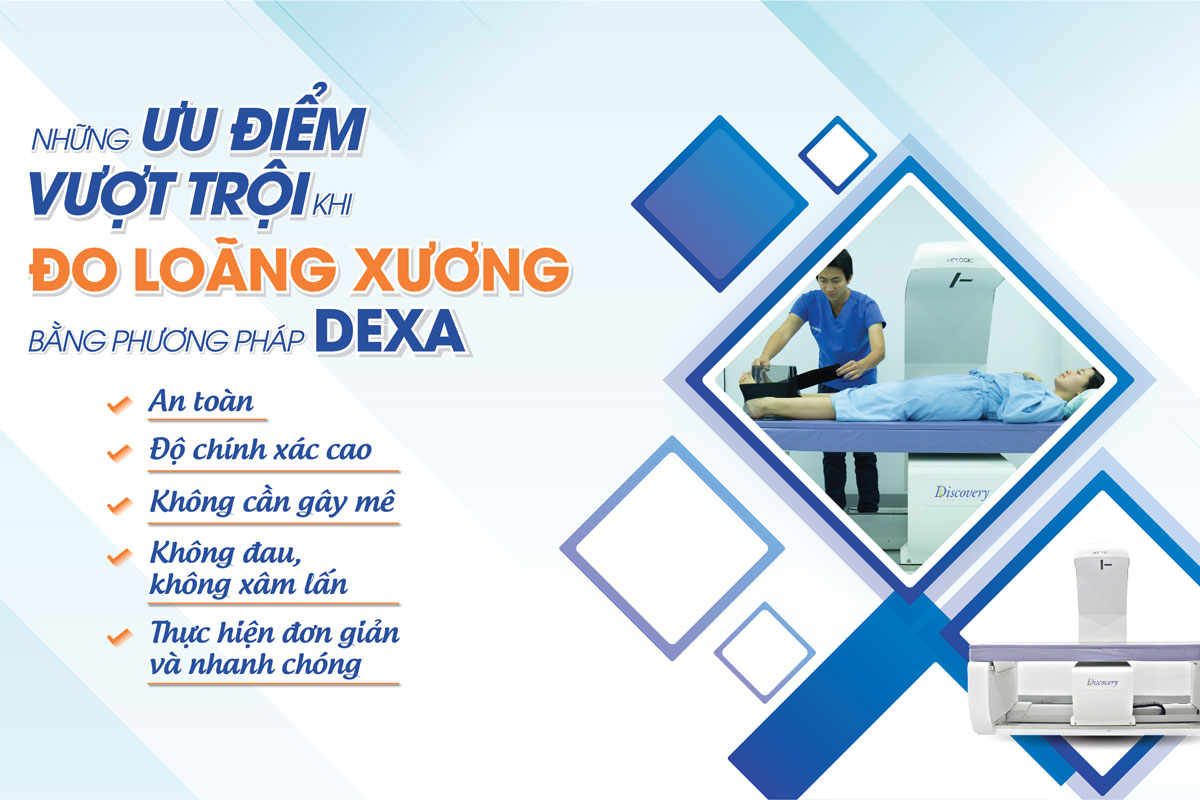
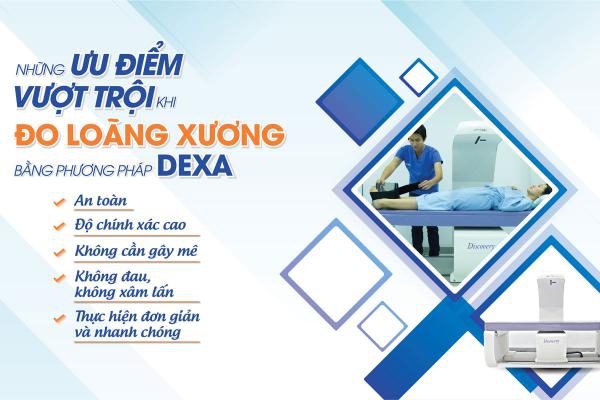
Outstanding Advantages of Dexa Bone Densitometry
The most serious complication of osteoporosis is the increased risk of bone fractures and serious consequences of bone fractures such as pain, reduced quality of life, disability, and even death. However, osteoporosis is a silent disease, with no symptoms when first diagnosed, so diagnosis will be delayed if based only on clinical symptoms. To diagnose osteoporosis, it is currently necessary to rely on the assessment of bone mineral density (also known as bone density or bone mass). There are many methods of measuring bone density, but DEXA is the most accurate method and is widely used worldwide with many outstanding advantages.
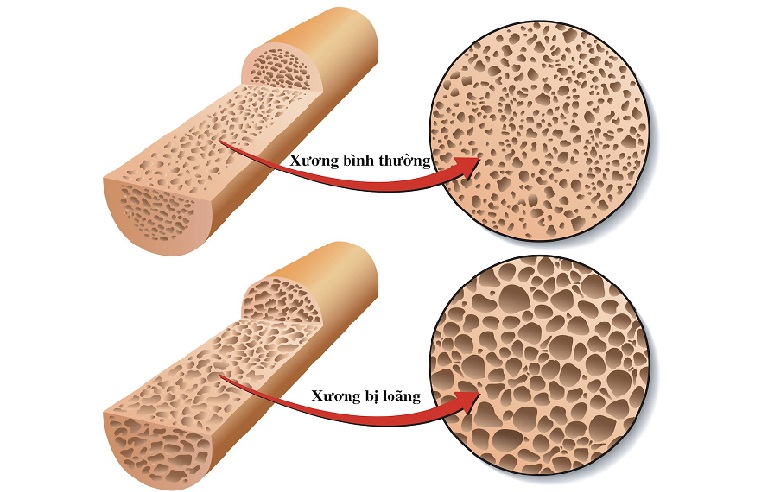
Diagnosis of osteoporosis by bone densitometry
1. What is osteoporosis and osteoporosis measurement?
The World Health Organization (WHO) defines osteoporosis as a disease of the skeletal system characterized by reduced bone mass and microarchitectural deterioration of bone tissue, leading to reduced bone strength and an increased risk of fracture.
Bone density is the mineral density in a unit area (cm2) or volume (cm3) of bone tissue. To diagnose osteoporosis, bone mineral density (BMD) measurements are used to assess the current bone condition and predict the risk of future fractures.
2. What is the DEXA method?
DEXA is a dual energy X-ray absorptiometry method to determine bone density.
Normally, the DEXA method will be performed at the lumbar spine and femoral neck (non-dominant side). When measuring, the machine will emit X-ray beams at a high energy level and a low energy level, then the machine will read the energy attenuation of these two beams after passing through bone tissue, the absorption is proportional to bone density.
This is a method widely used in the world, recognized by the World Health Organization (WHO) as the gold standard for diagnosing osteoporosis.
3. Outstanding advantages when measuring osteoporosis using the DEXA method
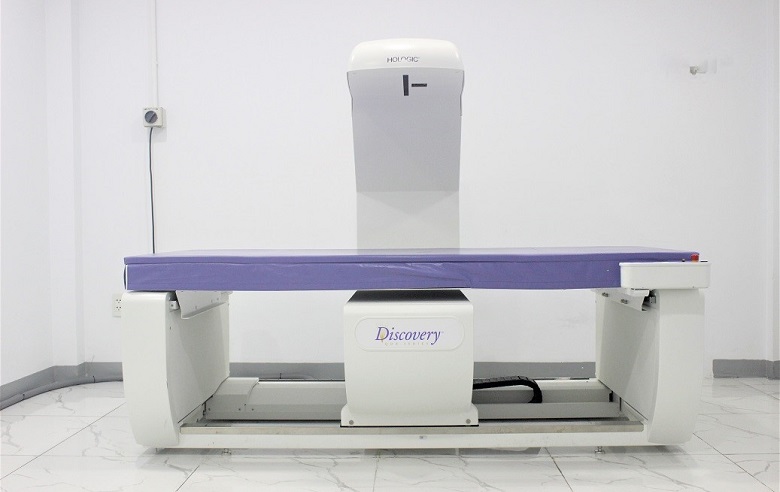
DEXA bone density measurement machine
The DEXA method is used to:
- Detecting the risk of osteoporosis
- Diagnosis of osteoporosis
- Predicting future fracture risk
- Evaluation and monitoring of osteoporosis treatment results
- Measure body composition (muscle mass, fat mass, bone mass), basal metabolism
With the following outstanding advantages:
- Safety: Low radiation dose is safe for both patients and staff.
- Simple and quick: Patients only need to wear comfortable clothes, not wear jewelry and take measurements in 10-15 minutes.
- Accurate: This is the most effective method of diagnosing osteoporosis today, giving highly accurate results, with an error of only 1%.
- No anesthesia, no fasting, no pain, non-invasive.
- Whole-body scans can be used to measure the body's proportions of muscle mass, fat mass, bone mass, and assess basal metabolic status to predict certain disease risks.
Diagnostic criteria for osteoporosis
The bone density value obtained will be calculated by the machine to give two indexes: T and Z.
The T-score is used for postmenopausal women and men over 50 years of age, when compared with young, healthy people:
- T > -1: Normal
- T ≤ -1 and T > -2.5: Osteopenia
- T ≤ -2.5: Osteoporosis
- T ≤ -2.5 with recent history of fracture: Severe osteoporosis
The Z-score is only used to evaluate premenopausal women, men <50 years old and young people when compared with people of the same age.
Who should have osteoporosis measured by DEXA?
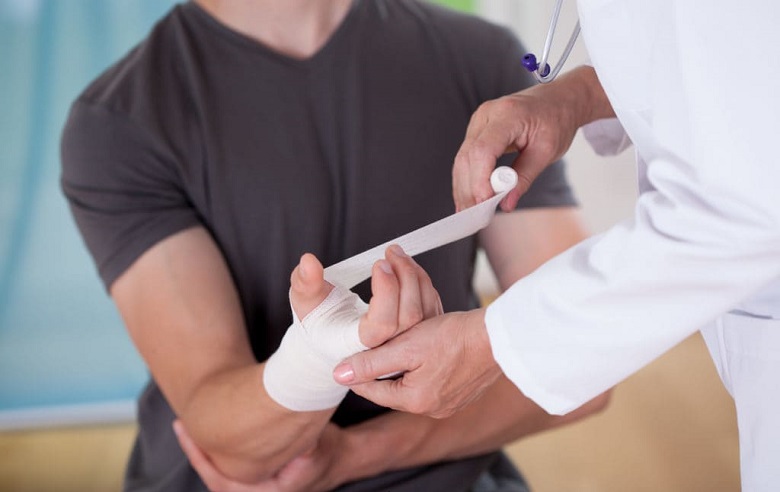
People with a history of fractures should have osteoporosis measured.
The following subjects are recommended to have bone density measured periodically at least every 2 years or as directed by a doctor:
- Postmenopausal women and men over 50 years of age;
- People who are overweight, obese or have low body weight, BMI ≤ 18.5 kg/m2;
- People using glucocorticoids at doses ≥ 5mg prednisone;
- People who regularly smoke, drink alcohol and caffeine;








FOR A HEALTHIER LIFE
Working hours: Monday - Friday
(Morning 7:00-11:30, Afternoon 13:30-17:00)
Copyright © 2025. VIETSOVPETRO MEDICAL CENTER | Developed by CONNECTWORLD CO.,LTD